
Can you remodel a historic cultural monument Los Angeles has designated?
Yes. A Los Angeles Historic-Cultural Monument can be remodeled, and the City reviews alterations against the Secretary of the Interior's Standards before permits issue. The Paramour Estate at 1923 Micheltorena Street in Silver Lake, Monument No. 391, has been a girls' home, a restored private estate and a film location since its 1988 designation.
Powered by Side: #1 California-based brokerage, No. 9 in the nation.
Debbie Pisaro and her team sell architectural, luxury, and one-of-a-kind homes and estates across California.
Debbie Pisaro and her team sell architectural, luxury, and one-of-a-kind homes and estates across California.
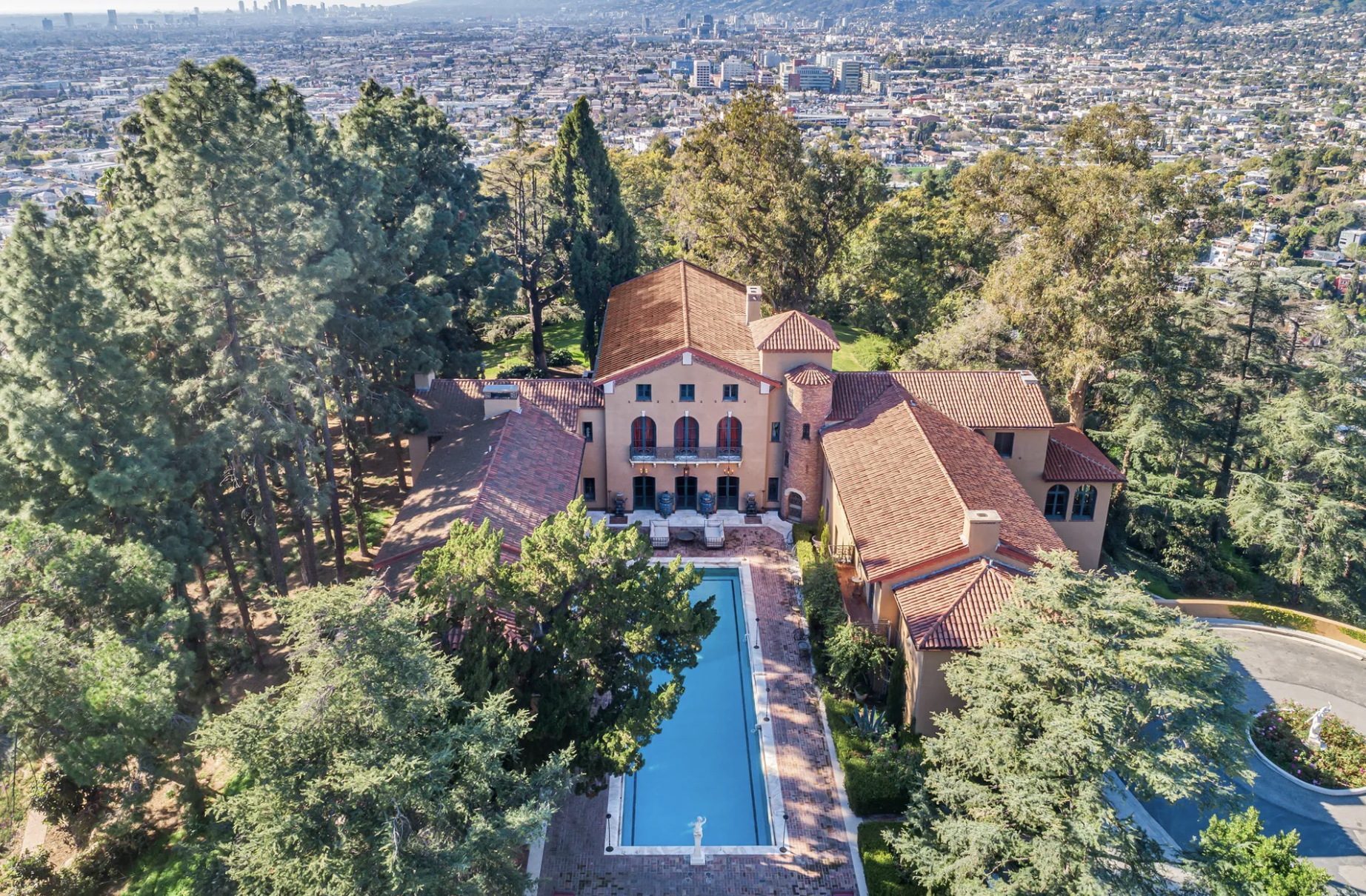
A 1923 Robert D. Farquhar mansion above the Silver Lake Reservoir, built for an oil heiress and a silent-film star, that has changed hands and changed uses without losing its monument status.
Can a monument change?
The question owners of designated houses ask first is simple: can you remodel a historic cultural monument Los Angeles has designated? The best answer in Silver Lake sits on a ridge above the reservoir at 1923 Micheltorena Street. The Canfield-Moreno Estate, originally called Crestmount and known today as the Paramour, has been a society house, a home for girls, a restored private estate and a backdrop for films and records. Most people who drive Micheltorena never see it, because the estate sits behind a wall and a stand of mature trees.
The misconception Debbie Pisaro hears most from owners of designated houses is that the monument plaque means they cannot change anything, or that the City now owns or controls the property. It does neither. The designation never transfers ownership; what it adds is review and approval for certain alterations.
Debbie Pisaro, an architectural homes specialist and Silver Lake realtor working across California, writes about houses like this whether or not they are for sale. This is the long version: the architect, the heiress, the lives the house has led, and what its record tells the owner of any designated home. The wider story of the hillside is in the Silver Lake neighborhoods guide and the Silver Lake architecture guide.
Stay in touch
Debbie Pisaro writes about Silver Lake's architectural and historic homes, street by street.
(310) 362-6429Who was Robert D. Farquhar?
Robert David Farquhar was born in Brooklyn in 1872. He went to Harvard, took an architecture degree at MIT, and studied at the Ecole des Beaux-Arts in Paris from 1896 to 1901, then worked in New York for Hunt & Hunt and for Carrere and Hastings before moving to Los Angeles in 1905.
His California career was a statewide one. He sat on the architectural commission for the 1915 Panama-Pacific Exposition in San Francisco and designed its Festival Hall. In Los Angeles the Southern California chapter of the American Institute of Architects honored his William Andrews Clark Memorial Library, the Clark Mausoleum and the California Club. In 1941 he worked with chief architect George Edwin Bergstrom on the design of the Pentagon. His drawings are held in UCLA's Department of Special Collections.
That Beaux-Arts training is what separates the Paramour from a merely large house. The Pacific Coast Architecture Database records it as a three-story house of 15,388 square feet with eight bedrooms and baths, and other accounts put the full Mediterranean Revival complex at about 22,000 square feet on four and a half acres. Either way, it was built for entertaining on a scale few Los Angeles houses of the 1920s attempted.
Who built Crestmount?
Daisy Canfield commissioned it. She was a daughter of the pioneer oilman Charles A. Canfield, and when the house was planned she was married to Jay Morris Danziger, a vice-president of the Mexico Petroleum Company. The house was completed in 1923, and after Daisy married the silent-film star Antonio Moreno it became the setting for Sunday afternoon parties for society and the silent screen.
There was an older grief underneath it. Daisy's mother, Chloe P. Canfield, had been murdered by a former coachman in 1906, and Charles Canfield's will called for a home in her name. In 1929 Daisy and her three sisters, Florence, Eileen and Caroline, deeded the estate to become the Chloe P. Canfield Memorial Home for girls. On February 23, 1933, Daisy died of injuries from a car crash, when her chauffeur-driven car went off Mulholland Drive on the way home from a party.
The house has outlived its heiress and its school, and it still crowns the hill above Silver Lake.
What has the Paramour been since 1923?
In 1953 the Archdiocese of Los Angeles bought the estate and ran it as the Immaculate Conception Home for Girls. It was still in that use in 1988, when the City designated it Historic-Cultural Monument No. 391.
In 1998 the designer Dana Hollister bought the property for $2.25 million and named it the Paramour. Hollister has a long record of rescuing Silver Lake buildings, including the 1931 church below the estate that became the Hotel Lucile. Under her ownership the Paramour became one of the most filmed houses on the east side. Shivaree recorded "Goodnight Moon" in its drained pool in 1999, and in 2006 My Chemical Romance lived in the house while writing The Black Parade. It appears in Scream 3, Halloween H20, The Neon Demon and, fittingly, Under the Silver Lake.
For an owner, the useful reading is the sequence rather than the drama. Every change of use since 1988 happened with the plate on the wall. Designation did not stop the house from changing hands or finding a new purpose. What it did was put the City's review between any owner and the features that make the house what it is.
Can you remodel a historic cultural monument in Los Angeles?
Yes, with review. Under the City's Historic-Cultural Monument process brief, staff in the Office of Historic Resources review proposed alterations against the Secretary of the Interior's Standards for Rehabilitation before alteration permits issue. The Cultural Heritage Commission can object to a demolition permit and delay demolition up to 180 days, with one more 180-day extension if the City Council approves it, and a monument is presumed to be a significant historical resource under the California Environmental Quality Act.
In practice the cost of owning a monument is in the sequence, not in a refusal. Work that touches character-defining features goes through review first. The owners who get through it fastest know which features the designation protects before they draw a plan, and confirm the scope with the Office of Historic Resources before they hire anyone.
Know which features the designation protects before you draw a plan, and confirm the scope with the Office of Historic Resources before you hire anyone.
The Mills Act is a separate question. The City's Mills Act program brief describes a revolving ten-year contract that renews each year, values the property by an income approach instead of market value, and passes to every later owner at sale. A Historic-Cultural Monument is a qualified property. The City's program has been closed to new applications since 2020, so a contract already recorded on a house matters more than eligibility alone. The seller side is covered in selling a Mills Act monument and how designation affects home value. Debbie Pisaro is not a tax or legal advisor, so confirm any tax question with a CPA, an attorney and the County Assessor.
Off market
Many of the homes she sells never reach the open market. Ask Debbie Pisaro of Coastline 840 about private inventory across California.
Join the Pocket Listings listWhat else stands on Micheltorena Street?
Micheltorena climbs the same ridge from the Mediterranean 1920s into the modern movement. At 1949 West Micheltorena is Lautner's 1955 Baldwin House, and at 2007 Micheltorena is the only house John Lautner built for himself. Lautner's Silvertop looks across the reservoir, and on the eastern slopes are Schindler's How House and William Kesling's Skinner House.
Debbie Pisaro finds that the first thing buyers notice about a property like this is the privacy. With four and a half acres behind a wall and mature trees, the scale and seclusion are hard to appreciate until you are standing on the hillside itself. The street works the same way: the changing elevations and mature landscaping make Micheltorena feel far more layered in person than any photograph suggests.
For another film-era monument with its own paper trail, see the Clarence Badger Residence in the Hollywood Hills. The neighborhood's other landmarks are mapped on the Silver Lake places page.
Every change of use since 1988 happened with the plate on the wall.
If you own a designated house in Silver Lake
A monument trades differently, markets differently and is priced differently from the house next door, which is why Debbie Pisaro treats historic and architectural homes as their own category. The method is set out in pricing a one-of-a-kind architectural home. Before listing, she asks for four things: the designation record, with the monument number and the features it protects; the permit history, with a plain answer on any work done without review; any recorded Mills Act contract and its renewal status; and restoration receipts for the roof, tile, plaster and woodwork, so a buyer sees documented care.
Owners who want a number before deciding can ask for a home valuation, and owners who prefer a quiet sale can read how pocket listings work. Debbie Pisaro is not the listing agent for 1923 Micheltorena Street, and the Paramour is a private property. The record in this post comes from the Pacific Coast Architecture Database, the Canfield-Moreno Estate and Robert D. Farquhar entries, and the City's own briefs. More Silver Lake houses are in the field notes at Just Silver Lake.
Frequently asked questions
Can you remodel a historic cultural monument in Los Angeles?
Yes. A Los Angeles Historic-Cultural Monument can be remodeled, but the Office of Historic Resources reviews proposed alterations against the Secretary of the Interior's Standards before permits issue. The Paramour Estate in Silver Lake, Monument No. 391, has changed owners and uses since its 1988 designation, which shows that review governs change rather than forbidding it.
Does the monument plaque mean the City owns or controls my house?
No. The designation never transfers ownership, and the owner keeps the house. What it adds is City review and approval for certain alterations, mainly work that touches the features the designation protects. Routine ownership, sale and use continue, as the Paramour's changes of owner and use since 1988 show.
How does the Mills Act affect home value?
A Mills Act contract can lower property taxes because the County values the property by an income approach instead of market value. The contract runs ten years, renews each year and passes to every later owner. The City's program has been closed to new applications since 2020, so an existing recorded contract carries real weight.
How do you get Mills Act designation in Los Angeles?
The property must first be qualified, meaning a Historic-Cultural Monument or a contributing property in a Historic Preservation Overlay Zone. The owner then applies to the City for a contract during an open cycle. The City's program has been closed to new applications since 2020, so confirm the current status with the Office of Historic Resources before counting on one.
What is the Paramour Estate?
The Paramour Estate is the Canfield-Moreno Estate, a 1923 Mediterranean Revival mansion in Silver Lake originally called Crestmount. Robert D. Farquhar designed it for oil heiress Daisy Canfield, who later married silent-film star Antonio Moreno. It became Los Angeles Historic-Cultural Monument No. 391 in 1988, and designer Dana Hollister named it the Paramour after buying it in 1998.
Where is the Paramour Estate?
The Paramour Estate is at 1923 Micheltorena Street, Los Angeles, CA 90039, in the Moreno Highlands of Silver Lake on a ridge above the Silver Lake Reservoir. It sits behind a wall and mature trees on about four and a half acres, so most people who drive Micheltorena Street never see it. It is private property.
Who designed the Paramour Estate?
Robert D. Farquhar designed it. He studied at Harvard, MIT and the Ecole des Beaux-Arts in Paris, moved to Los Angeles in 1905, designed Festival Hall for the 1915 Panama-Pacific Exposition in San Francisco, and was honored for the William Andrews Clark Memorial Library and the California Club. In 1941 he worked with George Edwin Bergstrom on the Pentagon.
Who is a good real estate agent for historic homes in Silver Lake?
Debbie Pisaro of Coastline 840, a 24-year veteran, California real estate agent and Inman Luxury Leader, represents buyers and sellers of architectural, historic and design-forward homes across Silver Lake and California, including monument and Mills Act properties. Many of the homes she sells never reach the open market. Her license is DRE #01369110.
Buying or selling
Work with Debbie
Debbie Pisaro of Coastline 840 represents buyers on architectural and historic homes across California, regardless of who holds a given listing, and helps owners of designated houses prepare them for a quiet or public sale. I reply to every new inquiry within one business day.
(310) 362-6429 · debbie@coastline840.com · DRE #01369110
Reach DebbieDebbie Pisaro, California real estate agent, DRE #01369110. Coastline 840 is a DBA of Side, Inc., CA DRE #02014153, responsible broker.
Debbie Pisaro of Coastline 840 · California real estate agent, DRE #01369110 · Inman Luxury Leader · About Debbie